


As a youth pastor, it can be tempting to do strange things to get students in the door. We care about young people’s spiritual growth, but we’ve sometimes used bizarre motivations to incentivize discipleship: “If we break our attendance record, I’ll shave my head.” “The person who brings the most friends to Bible study will win an Xbox.” I’ve even seen youth ministers offer new iPhones to a lucky guest. It’s fine to have youth group parties, give rewards for good work, and provide a camp discount to those who register early. But I’m concerned we’ve sometimes adopted an overly incentivized youth ministry culture that wins students to gimmicks and leaves Jesus as a side attraction.
As with many errors in modern youth ministry, the motivation for using these incentives usually comes from a good place. After all, who doesn’t want students to show up, read their Bibles, or invite friends to hear about Jesus? But are material, emotional, and social gimmicks the best way to promote discipleship?
As a youth pastor, it can be tempting to do strange things to get students in the door.
Fight an Instant-Gratification Mindset
In The Weight of Glory, C. S. Lewis famously wrote:
We are half-hearted creatures, fooling about with drink and sex and ambition when infinite joy is offered to us, like an ignorant child who wants to go on making mud pies in a slum because he cannot imagine what is meant by the offer of a holiday at the sea. We are far too easily pleased.
Do our youth ministries accidentally promote “mudpie Christianity”? Would it be better to build a ministry that helps students become less easily pleased.
We live in a culture where you can pop something in the microwave or run through a drive-thru. But intuitively we know that’s not the healthiest option. The same is true with spiritual habits. There’s no such thing as drive-thru discipleship. Cultivating a student’s faith takes time, effort, and consistency. Maturity and speed don’t go together. If you aim for quick results and attempt to circumvent the hard work of growth with worldly incentives, you’ll unintentionally disciple your students in the wrong direction.
Here are three reasons to reconsider using “mudpie incentives” in your ministry.
1. Gimmicks make the essential trivial.
When we use gimmicks or bait-and-switch promotions to incentivize spiritual disciplines, evangelism, and church attendance, we’re unintentionally teaching students that communion with God and obedience to him are not a goal but the means to an end. This promotes a culture of performance, and it trivializes the Spirit’s work of sanctification by putting the material giveaway in the place of importance.
2. Gimmicks can hurt lost people.
Bait-and-switch methods have never worked over the long haul. Say you’re an unbelieving student who is invited to church by a friend. But when you arrive, you discover that your friend was using you to win a prize. That could damage your perception of both your friend and her church. You might feel like you are a means to an end. You might feel like your friend loves the prize more than you. You might be right. Ultimately, it protects the church’s reputation and cultivates more biblical motivations for evangelism and discipleship when we appeal to Jesus’s love for people instead of gimmicks (2 Cor. 5:14–15).
3. Gimmicks create an unsustainable ministry culture.
It’s tempting to believe incentives and gimmicks will jump-start your ministry. You might even think that after the fast start, you’ll be able to change and do things the right way. But ultimately you win people to what you win them with. If you win students with prizes, you’ll also lose them to prizes. So if you start out with a big incentive, expect you’ll need the budget and time for gimmick after gimmick to keep the ministry going. Is that what you really want to build?
Win Youth to the Better Prize
The Sage describes good teaching and instruction as “a graceful garland for your head and pendants for your neck” (Prov. 1:9). His point is that wisdom is its own reward. The Christian life is not without incentive, but the incentive is knowing God. We read his Word, pray, participate in the church community, and practice evangelism because in the process, we get Jesus!
The Christian life is not without incentive, but the incentive is knowing God.
My Bible reading isn’t a chore. It’s an invitation to meet Jesus in its pages. I invite my friends so they will know the Jesus I know. I don’t attend church to get my name on an honor list. I attend because Jesus has created this community, and I need it. The incentive is Jesus, and he’s better than any prize. Let’s teach our youth Jesus is worth it. This may not be the fastest way to fill up a room, but it’s the only way to cultivate lifelong discipleship.
Get ‘The Weary World Rejoices’ Advent Devotional for FREE
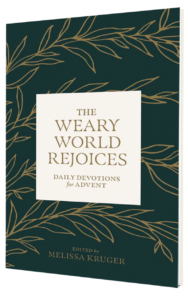
Are you dreading a hectic December? Do you wish your weariness could give way to quiet contemplation of the meaning of Christmas? If so, we’re delighted to offer a FREE Advent devotional that can help. This daily devotional is written by TGC’s editorial staff—Winfree Brisley, Courtney Doctor, Melissa Kruger, Collin Hansen, Megan Hill, Betsy Childs Howard, Brett McCracken, Ivan Mesa, Matt Smethurst, Sarah Eekhoff Zylstra, and more!
We’re delighted to offer you the digital version of this Advent devotional for FREE today. If you or someone in your life needs to be reminded of the light of Christ at this time of year, click on this link to receive instant access today.