


In the book of Ezra, Ezra doesn’t even appear until chapter 7. That means more than half the book unfolds before the man for whom it’s named ever steps onto the scene.
That observation stayed with me long after our sermon series in the book ended. The more I reflected on it, the more it resonated with my experience of leadership.
Ezra isn’t a leadership manual; the book’s primary purpose is to highlight God’s sovereignty and his steadfast commitment to carrying out his redemptive purposes in and through his people. But if we pay attention to how God uses Ezra in his ministry context, there is a word here to those called to lead stories they didn’t start.
Story Ezra Entered
Long before Ezra arrives, the Jewish exiles hear about the possibility of homecoming through King Cyrus’s decree, fulfilling the Word of the Lord spoken through Jeremiah (chap. 1). Stirred by the Spirit, they leave the lives they had grown accustomed to and journey home to Jerusalem (chap. 2).
The rebuilding of the temple in Jerusalem begins, and when its foundation is completed, the exiles’ pent-up emotions erupt into shouts of joy and sorrow that could barely be distinguished from one another (chap. 3). Unexpected opposition then halts the rebuilding (chap. 4), but through a series of providential circumstances, the work resumes, and the temple is finally completed after a long journey of uncertainty (chap. 5–6).
This story is already filled with so many layers: stirring of the Spirit, risk, courage, failure, emotions, disappointment, uncertainty, sovereignty, grace. Every chapter seems to beg for more stories to be told.
The point is simple yet profound: Before Ezra ever leads, God is already at work. A story is already underway. Ezra 1–6 isn’t an extended introduction, as though everything before chapter 7 were simply a prelude to Ezra’s ministry. Rather, in God’s timing, Ezra is brought into a story far larger than himself.
The same is true for many leaders today who inherit a story they didn’t start. Every church carries memories of joy and sorrow, faithfulness and failure, growth and disappointment. Every congregation has a history that inevitably shapes its present. Wise leaders recognize that they aren’t beginning God’s work; they’re joining it.
Story Ezra Continued
What, then, can Ezra show us about leading a story we didn’t start? Here are four lessons.
1. Pray first.
When King Artaxerxes commissions Ezra to guide and teach God’s people who have returned to Jerusalem, Ezra prepares to enter this story by calling those traveling with him to fast and pray. Rather than relying on military protection to get him safely to Jerusalem, he turns to trusting in God’s provision and protection (chap. 7–8).
Notice how quickly Ezra turns to prayer. Prayer positions our minds and hearts to actively walk in the reality that the story ultimately doesn’t depend on us. Do you have a habit of praying? Pause often and pray something even as simple as this: “Lord, go before me and help me join where you are and what you’re doing.”
Prayer reminds us who is ultimately going before us to build up his people.
2. Expect heartbreak.
In Ezra 9, after beginning his teaching ministry and seeking spiritual renewal among the people, Ezra learns that God’s people have fallen into serious covenant unfaithfulness. His response is surprising: He tears his garments, pulls out his hair, and falls before God.
His first response isn’t outrage: Why is this happening now? I just started my new role! It’s not damage control: How bad is the situation, and what are my immediate action items? And it’s not blame shifting: This problem predates me. Thank God I’m not responsible for this!
Prayer positions our minds and hearts to actively walk in the reality that the story ultimately doesn’t depend on us.
Ezra’s instinctive and immediate response is grief.
Many leaders enter into new churches and ministry contexts hoping to teach, mentor, cast new vision, and build something impressive and influential. We rarely anticipate how much ministry will involve disappointment, betrayal, conflict, and heartbreak. Yet these experiences are often where God forms true shepherds and leaders.
Ezra embodies this truth. He enters the story of the people he’s been called to serve. Ezra shows us that faithful leaders aren’t those who avoid heartbreak. They’re those who allow heartbreak to deepen their love for God’s people. This may be one of the most challenging and humbling tasks of a leader entering an already begun story. After all, we are not hardwired to naturally embrace heartbreak, especially when adjusting to a new ministry context is already difficult enough.
Grief allows us to move beyond managing people and begin loving them, especially when their wounds, failures, and heartbreaks become our own.
3. Listen well.
As Ezra grieves, Shecaniah steps up to speak on behalf of the people, acknowledging the seriousness of their corporate sin normalized through repeated practices and compromises. Ezra listens. He receives Shecaniah’s challenge and finds the courage to rise from his state of grief and take the necessary next step (chap. 10).
Leaders often enter new contexts feeling pressure to arrive with answers. Ezra shows another way. He creates space to receive a timely nudge from one of his lay leaders and allows it to shape his next steps.
Every church contains stories, wounds, and concerns that leaders will never discover unless they cultivate the humility to listen carefully. Sometimes the most faithful thing a leader can do in a new context is to create space for people to speak honestly, and take their words seriously enough to discern what God may be saying through them.
Listening helps us to lay down our assumed answers and develop instincts to discern how God is already at work in a story that began before us.
4. Lead with courage.
After prayer, confession, and discernment, Ezra gets up from his place of grief and leads the people toward confronting their covenant unfaithfulness and pursuing costly repentance (chap. 10).
The path forward is complicated and uncomfortable, but Ezra understands that leadership requires courageous decisions and actions. Listening is essential, but it’s not the end of faithful and effective leadership. People need to be heard, but they also need to be led.
Leaders entering new settings often fear being perceived as either passive or domineering. Some of that tension is inevitable, especially in a season of transition. The goal, however, is to lead from a posture marked by both the humility to listen and the courage to act. Such leaders know they won’t lead perfectly, but they trust God to provide the wisdom, timing, and courage they need each step along the way.
The responsibility of leading reminds us that God is with us not only as we discern what needs to be done, but also as we take the difficult next step in turning a new chapter in a story.
Story Christ Stepped Into
Perhaps you’re inheriting a church where people still carry wounds from a previous pastor. Perhaps you’re stepping into a ministry context where certain practices have become untouchable, even if no one remembers why. Perhaps you’ve been thrust into a role you never planned for or called to a place you never imagined laying down roots, or you’re discovering that the story you thought you were entering isn’t the one unfolding in front of you.
Whatever story God has placed you in, you can trust that he was there before you arrived. Before Ezra entered the scene, God had already stirred Cyrus’s heart, preserved his own covenant people, provided what they needed to rebuild the temple, and sustained them through opposition. God didn’t begin being faithful because Ezra arrived; God sovereignly brought Ezra into the already existing story to demonstrate his faithful purposes.
This pattern in Ezra gives us more than a model for leadership; it points us to the gift and the way of our ultimate leader and Savior, Jesus Christ. While Ezra gives us a picture of what it means for a leader to enter a story that began before him, Jesus shows us something far greater: entering the story of a people who couldn’t save themselves.
Whatever story God has placed you in, you can trust that he was there before you arrived.
By all earthly measures, our story wasn’t worth entering. Yet Jesus saw and understood our plight and, in due time, stepped into our story of sin and brokenness. He bore our suffering, carried our sin, and willingly laid down his life for those who were once enemies. Through his entrance into our story, we’re given new life. Through our entrance into the stories of others, we’re given the privilege of participating in the way of Jesus.
Are you leading a story you didn’t start? Remember that we don’t have to be the authors of the story. We don’t have to fix everything we inherit. We’re invited to be faithful to the part God has graciously entrusted to us. This journey comes with its fair share of heartaches and headaches, but it also offers the profound joy of joining a story far greater than ourselves.
May we have the humility to recognize where God is already at work, the courage to follow where he leads, and the faith to look to Christ in all things. The One who entered our story, redeemed it through his life, death, and resurrection, reminds us that every story we enter was his long before we ever set foot in it.
Get ‘The Weary World Rejoices’ Advent Devotional for FREE
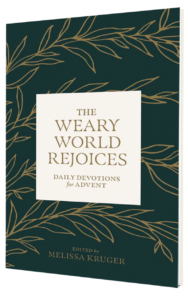
Are you dreading a hectic December? Do you wish your weariness could give way to quiet contemplation of the meaning of Christmas? If so, we’re delighted to offer a FREE Advent devotional that can help. This daily devotional is written by TGC’s editorial staff—Winfree Brisley, Courtney Doctor, Melissa Kruger, Collin Hansen, Megan Hill, Betsy Childs Howard, Brett McCracken, Ivan Mesa, Matt Smethurst, Sarah Eekhoff Zylstra, and more!
We’re delighted to offer you the digital version of this Advent devotional for FREE today. If you or someone in your life needs to be reminded of the light of Christ at this time of year, click on this link to receive instant access today.