|
|

|

|
|
Dear Reader,
Have you ever read two books on a similar subject that take different approaches and, in so doing, offer a level of insight that you couldn’t have gotten from just reading one of them? I experienced this recently when reading Mark Noll’s The Civil War as a Theological Crisis (UNC, 2006) followed by David French’s Divided We Fall (St. Martin’s, 2020).
This is what Andrew Wilson calls “counterpoint reading.” As he explains, “[The books] may have been written at the same time, they may address the same theme, they may overlap in their content, they may directly contradict each other, or something else entirely, but by being read together, the whole is greater than the sum of the parts.”
Andrew Wilson brings his counterpoint reading to bear on two recent books: The WEIRDest People in the World by Joseph Henrich and Fertility and Faith by Philip Jenkins. The level of insight offered is a gift to the church even as it deals with some heady and big-picture trends in our society. I highly commend his review.
October marked the 70th anniversary of C. S. Lewis’s The Lion, the Witch, and the Wardrobe. We published two exquisite and moving reflections by Russell Moore and Dan DeWitt, who help explain how and why Narnia still grips our imaginations seven decades later.
The one book I always recommend to better understand our racial history is Isabel Wilkerson’s The Warmth of Other Suns. Jen Oshman writes about how this book, with its rare combination of statistics and stories, can help bring greater clarity and empathy today.
Happy (counterpoint) reading!
Ivan Mesa
Editorial Director
|
New from TGC
|

|
|
Book Review
Andrew Wilson
|
|
Two of this year’s most stimulating books would seem to be saying precisely opposite things. Philip Jenkins’s ‘Fertility and Faith’ argues that religions (including Christianity) are more successful when families are larger. Joseph Henrich’s ‘The WEIRDest People in the World’ argues that Western Christianity became successful, and shaped the psychology of the modern West in extensive and definitive ways, by making extended families, and the obligations owed to them, smaller. Read the review.
|
|
|
Book Review
Jen Oshman
|
|
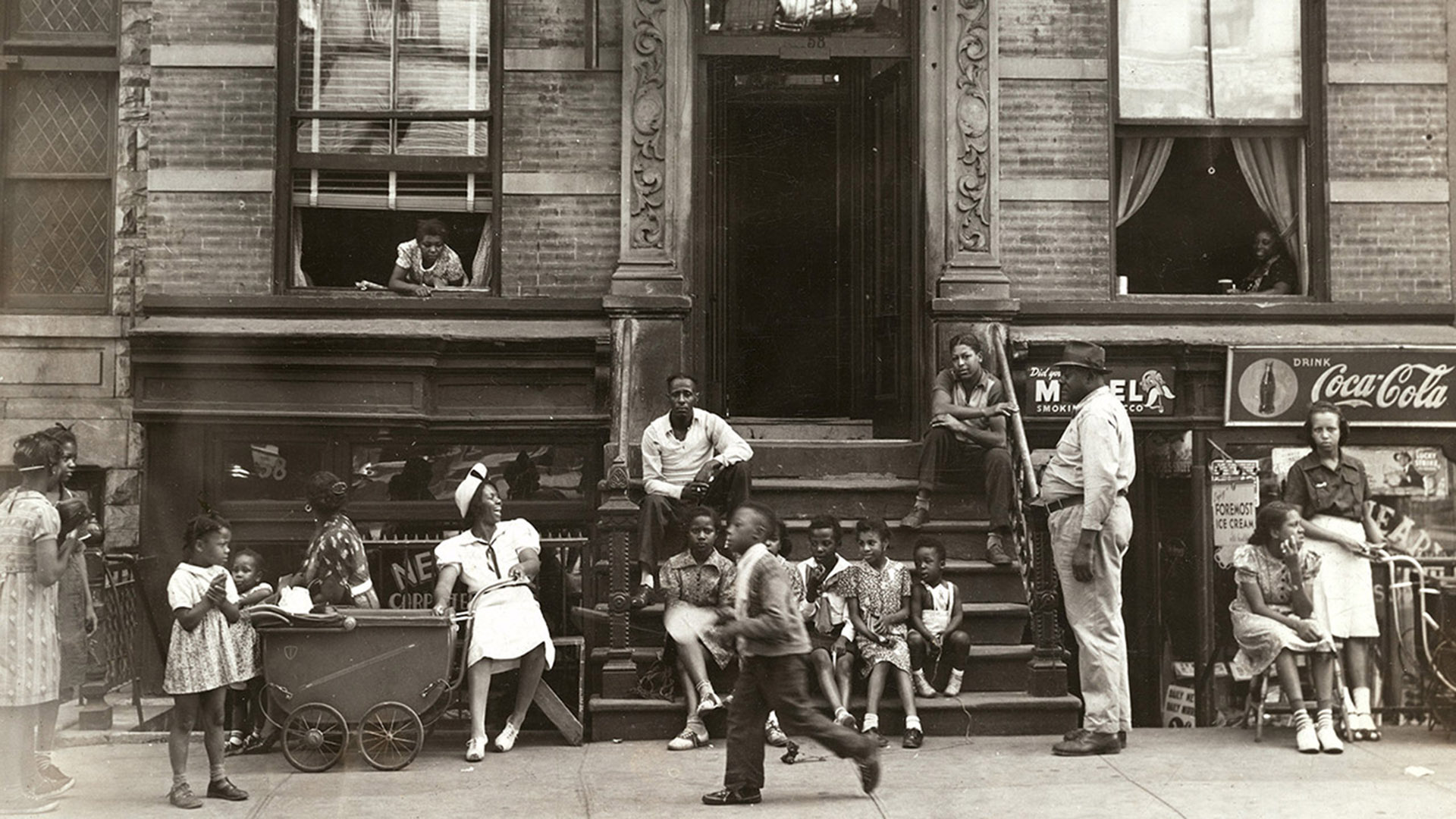
Reading ‘The Warmth of Other Suns’ with others is one way to pursue peacemaking in these divided days. For reading as a community will surely change a community. And reading as a nation just might change a nation. Rather than shouting at each other and repeating the stories and statistics inside our own echo chambers, reading in community is one way to show neighbor love. So take up this epic book and read it with others. Read the review.
|

Book Review
Russell Moore
|
|
Book Review
Stephen Story
|
|
Book Review
Ginger Blomberg
|
|
Book Review
Ian Harber
|
|

Book Review
Rodgers Atwebembeire
|
|

Book Review
Sarah Mesa
|
|
Book Review
Josh Wester
|
|

Book Review
Mark Tooley
|
|

Book Review
Karen Swallow Prior
|
|

Book Review
Andrew Spencer
|
|
|
Links for the Reading Life
|
| 1. |
Bret Stephens, The 1619 Chronicles (The New York Times)
An unrelenting piece critical of the 1619 Project by a columnist at the Times. Kudos—and well done!
|
| 2. |
David Brooks, America Is Having a Moral Convulsion (The Atlantic)
Even when I disagree, I read everything David Brooks writes, but this is leagues beyond his usual fare. More than 8,000 words, this incisive essay is packed with gems. In the end, he argues for the value of institutions. For Christians reading this, it’s a good reminder to invest our lives in the local church.
|
| 3. |
Emma Copley Eisenberg, Fact Checking Is the Core of Nonfiction Writing. Why Do So Many Publishers Refuse to Do It? (Esquire)
“Most nonfiction books are not fact checked; if they are, it is at the author’s expense. Publishers have said for years that it would be cost-prohibitive for them to provide fact checking for every nonfiction book; they tend to speak publicly about a book’s facts only if a book includes errors that lead to a public scandal and threaten their bottom line.”
|
| 4. |
Secret Author, Who Let the Dons Out? (The Critic)
“Who produces the better journalism? Well, in all my years in and out of university English departments I never met a freelance reviewer who couldn’t give a better sense of the average novel in 800 words than an assistant lecturer at the University of Uttoxeter.”
|
| 5. |
Tim Ferriss, Finding the One Decision That Removes 100 Decisions (or, Why I’m Reading No New Books in 2020)
I hold more to Alan Jacobs’s “read at whim” approach, so I’m not endorsing Ferriss’s approach. But I appreciated the intentionality in this piece. And as a productivity junkie, I agree with this insight: “look for single decisions that remove hundreds or thousands of other decisions.”
|
| 6. |
Tina Jordan, The Essential Agatha Christie (The New York Times)
If you’re a fellow Hercule Poirot fan, then you’re a kindred spirit who no doubt likes to use little grey cells. Here’s a good guide to reading Poirot among Christie’s other works. And I always recommend David Suchet’s Poirot—he played the character spanning 25 years and 70 episodes.
|
| 7. |
Brian Mattson, Celebrating the Legacy of Herman Bavinck: An Interview with James Eglinton (The Gospel Coalition)
“Often we think of theological doctrines as disembodied ideas that float outside of space and time, and that it is a straightforward thing to just ‘lift’ them without alteration from one context to another. But Bavinck was self-conscious that his work exists in the context of a particular age and culture, and that it comes from the pen of a particular three-dimensional person with an upbringing, confessional tradition, society, education, experiences, friends, and a host of other influences.”
|
|
|
| |
|
|

The Gospel Coalition
8520 Allison Pointe Boulevard, Suite 220, Indianapolis, IN, 46250
Take control of your inbox
Manage your preferences and choose which newsletters you want to receive or unsubscribe from all emails.
|
|