|
|

|

|
|
Dear Reader,
One of the clarion calls of the Protestant Reformation was that Scripture alone is the ultimate authority for matters of life and godliness. This doesn’t imply some sort of reductive biblicism that rejects the value of creeds for helping us understand the historical teaching of Scripture. Yet it also doesn’t mean that external sources are necessary for arriving at faithful Christian doctrine.
However, recent evangelical debates over justification and the ordination of women as pastors have increasingly included appeals to extrabiblical sources as necessary tools for interpreting Scripture.
In debates about the ordination of women, increasing weight is being given to the idea that Paul, in his letter to Timothy, is primarily resisting women caught up in the Ephesian cult of Artemis. If his notoriously challenging phrase “Yet she will be saved through childbearing” (1 Tim. 2:15) is a direct reference to a local controversy, then Paul’s prohibition against women teaching might have applied only to certain local women. Thus, when Paul writes, “I do not permit a woman to teach or to exercise authority over a man” (v. 12), some argue that statement doesn’t necessarily apply broadly to contemporary Christians.
The argument that Christians must permit women to teach authoritatively within churches is being advocated on extrabiblical data. And, notably, it’s data that we don’t have evidence for within Scripture. Paul never mentions Artemis (a figure who likely figured prominently within his memory, see Acts 19:23–41) as a basis for doctrine anywhere in his extant letters.
In Preston Sprinkle’s book From Genesis to Junia, he announces his shift from complementarian to egalitarian. He states, “I don’t believe 1 Timothy universally excludes all women from positions of teaching and leadership over men.” Though he speaks extensively about the Artemis cult, he also claims that his “exegesis of 1 Timothy 2:8–15 rests primarily on the text itself, not on the cultural context surrounding Artemis.” That’s an important claim that fits well within an affirmation of sola scriptura.
Nevertheless, it’s worth pondering why such a supposedly natural reading of the text has been largely absent from the historical Christian witness on gender roles. Why has Paul’s alleged focus on the Artemis cult become a prominent theme for interpreting 1 Timothy in the last half-century? It seems likely that it’s part of a larger trend among egalitarians, as Tom Schreiner notes in his review, “to appeal to matters not stated or found in a text to overturn what the text actually says. An extratextual feature, never seen before in history, suddenly becomes the lens by which the text is read.”
Protestants should readily affirm Scripture’s sufficiency and be willing to follow where Scripture leads, even when it raises questions about traditional views. Yet we should be careful not to dilute our emphasis on the role of Scripture alone as the norming norm for all Christian doctrine, even when those doctrines run against cultural currents.
Happy reading!
Andrew Spencer
Associate Editor
|
New from TGC
|

|
|
Book Review
Thomas Schreiner
|
|
“‘From Genesis to Junia’ surveys the biblical narrative for women’s roles in the Old Testament, the Gospels, and Paul’s writings, covering all the significant passages. Though Sprinkle hasn’t provided any new data on the question of the relationship between men and women, his arguments may carry weight with some readers because they echo contemporary cultural norms.” Read the review.
|

|
|
Book Review
Obbie Tyler Todd
|
|
“The once-for-all delivered faith isn’t a Starbucks coffee we customize to the felt needs and cultural trends of our generation. Christianity has endured because of Christ’s faithfulness, not because of our inventiveness. Still, ‘Chosen Land’ reminds evangelicals that if someone believes that the gospel can be reduced to a commodity, we shouldn’t be surprised when he longs for a Christianity that looks exactly like the world.” Read the review.
|

Book Review
Jay Sklar
|
|
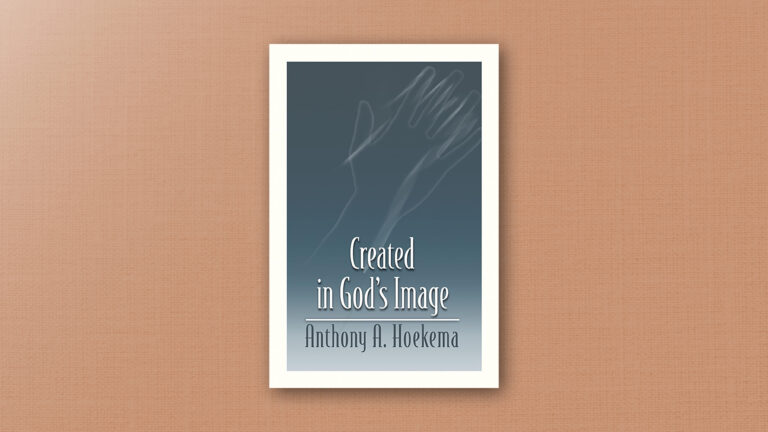
Book Review
Gregg R. Allison
|
|

Book Review
Andrew Spencer
|
|

|
Links for the Reading Life
|
| 1. |
Matthew Capone, “Tim Keller on the Importance of Reading Church History” (byFaith)
“In Hansen’s biography of Keller, we learn that his first church in rural Hopewell, Virginia, did not have the budget to buy him books, so he asked for books as Christmas gifts. He would then spend the next year reading them. Many of these titles came from Banner of Truth, a publishing house that specializes in Puritan texts. Keller’s reading included tomes like ‘The Works of Jonathan Edwards.’ Reaching nearly 2,000 pages, this two-volume publication’s famously-thin page margins and miniscule font size risk sending the reader to the optometrist. In the October interview, Hansen mentions Keller’s thorough reading of Martyn Lloyd-Jones and George Whitefield, both Banner of Truth staples.”
|
| 2. |
Trevin Wax, “A Little Theology Can Be Dangerous” (The Gospel Coalition)
“I’ve been plodding through Fyodor Dostoevsky’s Demons (translated as Devils in the Michael Katz edition I’m reading, also known as The Possessed). Plodding, because that’s the only pace that makes sense when tackling one of those doorstop Russian novels that can be both exhilarating and exhausting. I’m 400 pages in, and the story is just now getting interesting! As much as I love Dostoevsky, this isn’t Crime and Punishment or The Brothers Karamazov.
“But even as the novel is just finding its stride, one theme has pressed itself on me—one with serious implications for theological study. A little theology can be dangerous.”
|
| 3. |
Trevin Wax, “What Translation of Augustine’s Confessions Should I Choose?” (The Gospel Coalition)
“Several years ago, I adopted a new practice: reading Confessions at the beginning of each year, each time in a different translation. Since then, I’ve revisited Ruden but also read versions by Peter Constantine, Henry Chadwick, Frank Sheed, Maria Boulding, Anthony Esolen, and Thomas Williams. This annual read-through has become a spiritual reorientation for me, a way of tuning my heart at the year’s outset.”
|
| 4. |
Alan Noble, “On Loving Books” (You Are Not Your Own)
“We put our love in practice by how we read. And we read by desiring the good of the author. By this I mean that we don’t deny where the author goes astray from facts or from the truth of God’s reality. We don’t affirm the failures of a book or the personal sins of the author or the ungodly ideas embodied in the book. And we also don’t ignore the beauty of the book. The loveliness, the truth, the places where God’s reality shines through like the Sun and enlightens the reader, maybe even despite the personal beliefs of the author.”
|
| 5. |
Jake Meador, “Confronting the Unman” (Mere Orthodoxy)
“One of the persistent themes that C. S. Lewis addresses in his space trilogy is that humanity has a capacity to unmake itself. Indeed, there is some sense in which Lewis sees sin as being the unmaking of the person and the Last Judgment as being a kind of non-reversible unmaking.
“If you read something like The Great Divorce, part of the brilliance of his imagination is that you actually see how people in Hell become less human the longer they are there—they shrink, they become purely inward facing, and they retreat from anything beyond themselves.”
|
|

|
| |
|
|

The Gospel Coalition
8520 Allison Pointe Boulevard, Suite 220, Indianapolis, IN, 46250
Take control of your inbox
Manage your preferences and choose which newsletters you want to receive or unsubscribe from all emails.
|
|