|
|

|

|
|
Dear Reader,
As a regular user of my local gym, I always look to the beginning of the year with mixed feelings. On the one hand, the first few weeks of the year the gym gets crowded. On the other hand, there’s a lot of energy in the room as people set out to get in shape for the new year. And, though a lot of people disappear a few weeks into the month, it’s fun to watch the people whose awkward early workouts turn into major lifestyle and health changes.
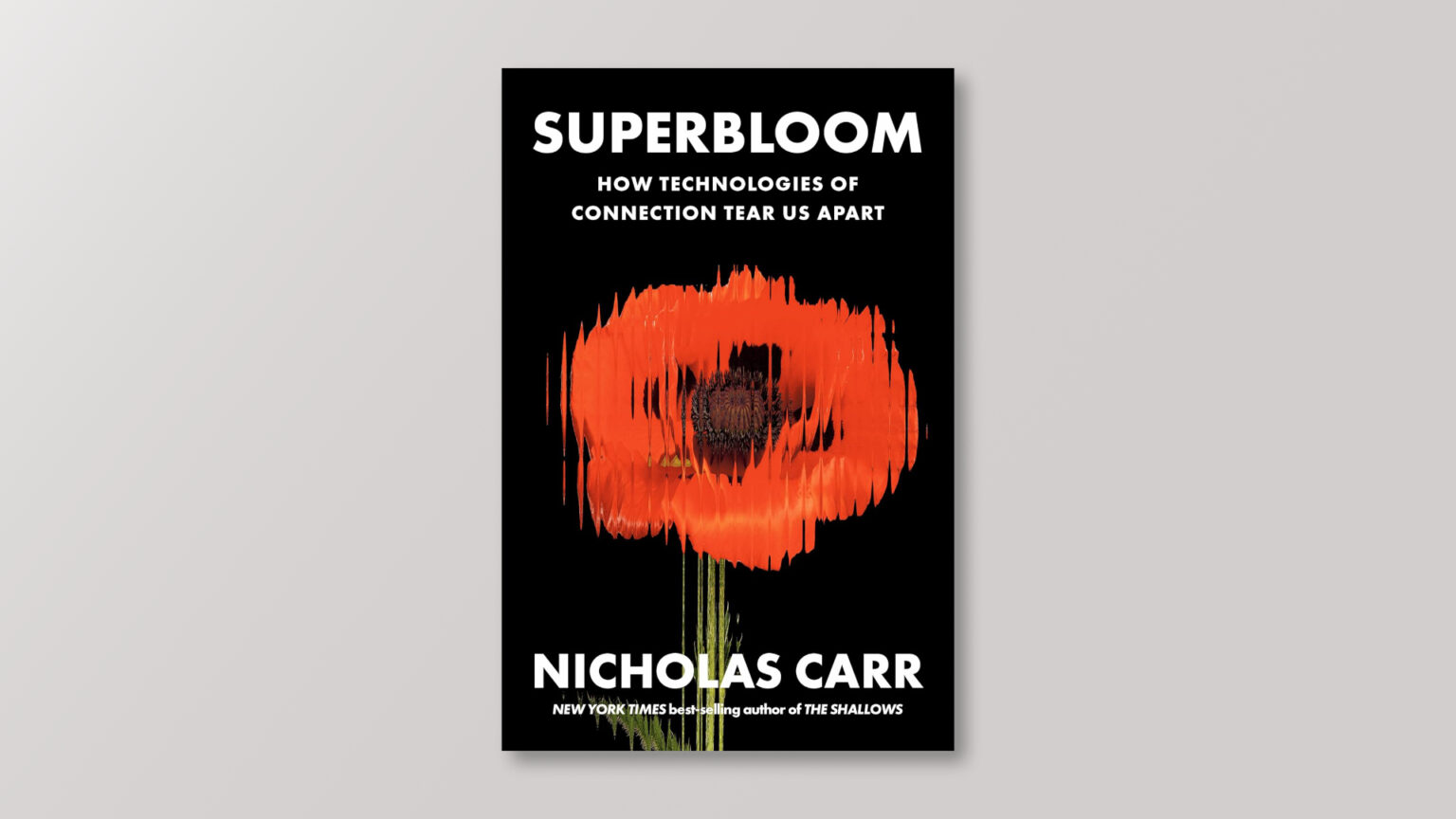
January is also a good month for reconsidering how we use digital technology. One reason is that, as Josh Chatraw argues in his review of Antón Barba-Kay’s A Web of Our Own Making, “Digital technology tacitly holds us captive, directing our behavior.” Changing our technological habits is hard, as Nick Weyrens observes in his review of Nicholas Carr’s Superbloom, because we’re addicted to “ultraprocessed communication.” Our digital technology gives us a sugar rush, but it can’t keep us healthy in the long term.
I’ve resolved to evaluate my digital diet this year. One of the ways I’ll do that is by reading a forthcoming book from The Gospel Coalition, Scrolling Ourselves to Death: Reclaiming Life in a Digital Age. It’ll never be easy to navigate our digital world, but at least I don’t have to figure it all out on my own.
Happy reading!
Andrew Spencer
Associate Editor
|
New from TGC
|
|
|
Book Review
Nicholas J. Weyrens
|
|
“I love Sour Patch Watermelon. These watermelon-shaped gobs of goodness are the definition of an ultra-processed food, a foodlike substance alchemized from the liquefied version of a real food (like high fructose corn syrup) and industrial chemicals (like titanium dioxide). I don’t like Sour Patch Watermelon because they’re good for me but because they taste good to me. And that’s exactly the point. Ultraprocessed foods are engineered to be hyperconsumable and hyperpalatable; no nutrients, all pleasure.” Read the review.
|

|
|
Book Review
Joshua Chatraw
|
|
“Digital technology tacitly holds us captive, directing our behavior. On the surface, this may seem far-fetched—our devices feel neutral, even liberating. Yet this sense of neutrality combined with the seeming insignificance of each individual click and swipe makes the repatterning of our behavior so effective. ” Read the review.
|

Book Review
Kelvin J. Washington
|
|

Book Review
Andrew Spencer
|
|

Book Review
Andrew Wilson
|
|

Book Review
Jen Pollock Michel
|
|

Book Review
Alastair Roberts
|
|

Book Review
Andrew Kelley
|
|

Book Review
Aaron Armstrong
|
|
Book Review
Leonardo De Chirico
|
|
Links for the Reading Life
|
| 1. |
Joel Snape, “I Was Lost in the Cesspit of Social Media. Then Jane Austen Showed Me the Way Out” (The Guardian)
“For about as long as I’ve been aware of my own mortality, I’ve had a mental list of books I should get round to reading. . . . More recently, I’ve had the same struggles as everyone else with the cesspitisation of social media. On a long enough timeline, pretty much every platform goes the same way: a quick nudge of the sliders to encourage more engagement, a few bad actors doing a bit of bot-farming and the whole thing collapses in on itself. . . . I still find time to be upset about that stuff during the rest of the day—I’m only human—but for a blissful hour or so before bed, I get thoroughly lost in the cares of someone who lived a century or more ago.”
|
| 2. |
Brett McCracken and Ivan Mesa, “Coming Soon: ‘Scrolling Ourselves to Death: Reclaiming Life in a Digital Age’” (The Gospel Coalition)
“As [Neil] Postman’s book did in 1985, our book in 2025 aims to help you understand how technology is forming you—and the people you lead. Our book focuses on the spiritual dynamics of this formation and its theological and ecclesial implications. We hope it’ll equip parents, pastors, youth leaders, educators, and individual Christians to understand and respond to this highly formative technological moment. With discussion questions after each chapter, the book is also designed for small groups, leader teams, or classes to go through together.”
|
| 3. |
Joe Carter, “Biblical Theology Is for Nerds” (The Gospel Coalition)
“The skills developed in parsing complex fictional universes can translate directly to biblical-theological reading. If you can track the complex relationships between X-Men characters across decades of comics, you’re developing the skills to understand the intricate associations between Old Testament prophets and their New Testament fulfillment. If you can appreciate how The Lord of the Rings weaves multiple storylines toward a final resolution, you’re preparing to see how Scripture weaves diverse genres and authors into one coherent testimony about Christ.”
|
|
| |
|
|

The Gospel Coalition
8520 Allison Pointe Boulevard, Suite 220, Indianapolis, IN, 46250
Take control of your inbox
Manage your preferences and choose which newsletters you want to receive or unsubscribe from all emails.
|
|