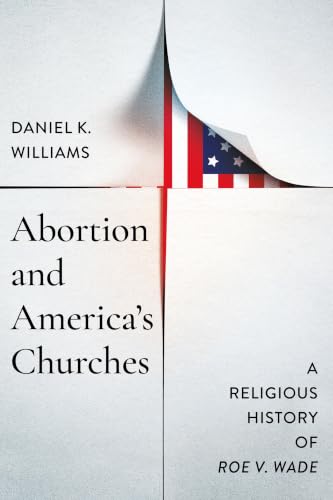
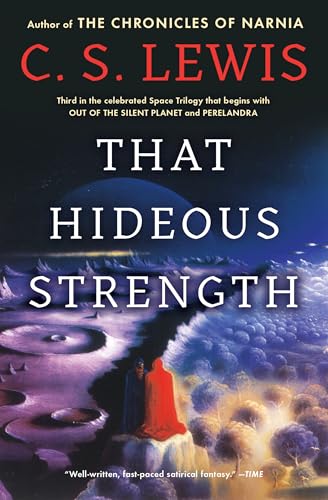
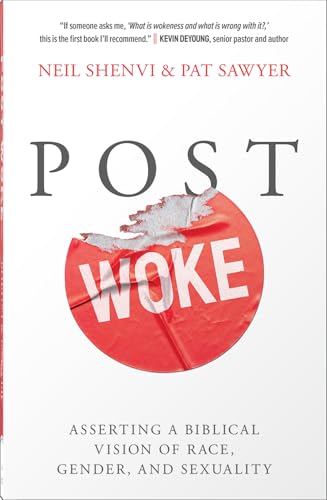
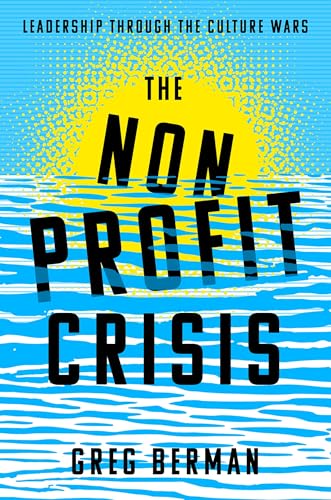
 | | Dear Reader, I remember where I was when I heard about the Dobbs decision in 2022. For the first time in my life, the law no longer treated elective abortion as a constitutional right. After decades of prayer, advocacy, and waiting by many faithful Christians, Roe v. Wade and Planned Parenthood v. Casey were finally overturned. It seemed like a huge step that would lead to the protection of unborn life. Yet tragically, in the years since that monumental decision, the average number of elective abortions performed per month has climbed. No doubt the FDA lifting the ban on mailing the popular abortion drug, mifepristone, has contributed to that increase. However, a deeper issue is that our culture has grown to view elective abortion as one valid option among many—often framed as a routine medical choice. The days of “safe, legal, and rare” are long gone. Now, women are often encouraged to celebrate their abortions as an act of autonomy. As Alex Ward reminds us in his review of Abortion and America’s Churches, “The law shapes our moral imaginations and horizons for action.” The five decades between the Roe and Dobbs decisions catechized our culture to view elective abortion as normal and acceptable. Nearly half of Americans believe abortion should be legal, even when they consider it immoral. These statistics are sad, but there’s no cause for despair. Christianity was birthed in a culture where abortion and infanticide were acceptable. Over time, Christianity reshaped the culture so the value of human life became assumed. Though we’ve lost ground, there’s hope we can change the culture again. It’s going to take a lot of careful counter-catechesis, beginning with our local churches, but the work is worthwhile. Happy Reading! | | ANDREW SPENCER | | Associate Editor | |  | | | | | “Written in a thoroughly evenhanded manner, Williams’s academic account of the religious contours of the abortion debate explains more than it advocates. He shows how media, politics, and law have shaped religious perspectives in divergent ways, which can help readers better understand how to dialogue with those on the opposite side of the issue. More significantly, ‘Abortion and America’s Churches’ reminds pastors and scholars that ending elective abortion requires not only changing laws but changing hearts as well.” | | REVIEWED BY ALEX WARD | | | | | | | | “These seven novels [can] powerfully shape our imaginations and deepen our thinking about the nature of humanity and the purpose of technology. It should come as no surprise that most are dystopian novels intended as warnings.” | | REVIEWED BY ANDREW SPENCER | | | | | | | | “As a pastor who often struggles to know when and how to engage specific cultural issues, I’m grateful for Shenvi and Sawyer’s work. The evangelical conversation on wokeness is needed, and it needs to mature through patient study and discussion as we continually evaluate our culture in light of the rich doctrinal heritage of the evangelical tradition. ‘Post Woke’ will encourage Christians to remain faithful as the conversation around contemporary critical theory matures.” | | REVIEWED BY TYLER HURST | | | | | | | | “The voluntary sector occupied by nonprofit organizations used to be a real American distinctive. Once a major asset to American life, the independence of nonprofits is being eroded by politics. Their effectiveness is ebbing. There may be a lesson for the church in that story as well. ‘The Nonprofit Crisis’ offers valuable insight into what we’re losing as polarized politics takes over our culture.” | | REVIEWED BY HUNTER BAKER | | | | | | | | “The purpose of good Bible study and teaching isn’t just the transfer of information; it’s the cultivation of love for God. A critical step toward that end is learning to delight in the study of God’s Word. In ‘Scripture’s Use of Scripture in the Old Testament,’ Swale encourages delight in Scripture by equipping his readers to recognize the Bible’s richness.” | | REVIEWED BY STEVE BATEMAN | | | |  | | 1 | Joel Miller, “10 Tips to Read More This Coming Year” (Miller’s Book Review) “If you read thirty minutes each day, that’s three to four books a month, maybe forty or more in a year. Reclaim a few extra minutes here and there throughout the day and it’s easier to accomplish than you might think. And who knows? Watch that list grow and you’ll probably be motivated to read even more. Whatever the right number is for you, there’s more than enough time this year to reach it.” | | 2 | Michael Ward, “Seventy-Five Years of Narnia” (Plough) “The year 2025 marks the 75th anniversary of the publication of one of the most successful children’s books of all time: The Lion, the Witch and the Wardrobe by C. S. Lewis, the first volume in his seven-book series, the Chronicles of Narnia. It has been translated into over forty languages, has been adapted numerous times for cinema, stage, television, and radio, and every year still ranks as a global bestselling title in the fantasy genre.” | | 3 | J.T. Reeves, “Tolkien Prophesied the Smartphone” (The Gospel Coalition) “As a pastor who has had (and is having) hundreds of conversations with high school and college men (and women) addicted to pornography, as a small group leader working hard to disciple my high school seniors to learn to work and sleep instead of scroll, and as a close friend trying to give practical advice to friends whose screens are inducing comparison and consumerism, the first and most obvious mitigator of sin is the brave decision to take off our rings of power.” | | |  | Wish you had a roundup of our best content?
Subscribe to our weekly Update. | | | |

|
|
About Us
|
Council
|
Donate
|
©2022 The Gospel Coalition, All Rights Reserved.
P.O. Box 170346 — Austin, TX 78717
Update Email
| Unsubscribe
|
|
|
|