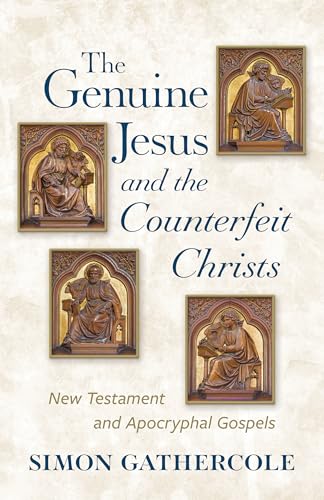
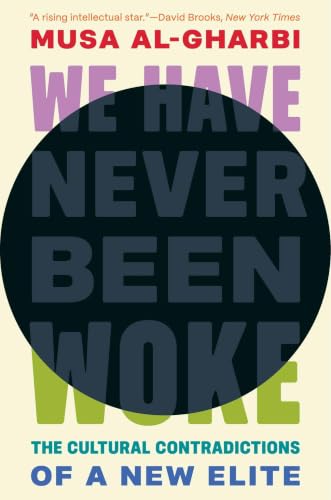
 | | Dear Reader, How should Christians respond to questions about lost gospels? Debates about the canon of Scripture rekindle every few years when new manuscripts are discovered, even ones that have wildly unorthodox content. In support of these hidden gospels, some skeptics—like journalist Catherine Nixey—argue that alternative streams of Christianity were “buried, in some cases literally, when [orthodox] Christianity came to power in the fourth century.” When journalistic claims echo the ideas in Dan Brown’s Da Vinci Code, it can become part of the cultural imagination. But the truth is much more boring than the yarns about ecclesial skullduggery that both Nixey and Brown spin. There was no political wrangling about alternative gospels in the early church. Rather, as Simon Gathercole shows in The Genuine Jesus and the Counterfeit Christs: New Testament and Apocryphal Gospels, the canonical Gospels were recognized because of their consistency with the apostles’ teaching. As Michael Kruger argues in his review, “The canonical gospels—Matthew, Mark, Luke, and John—are undoubtedly most consistent with the earliest Christian teachings about Jesus. The comparison isn’t even close.” So when headlines stir up fresh speculation about “lost gospels,” we can respond with confidence, because the real story is far more trustworthy than any fiction. Happy reading! | | ANDREW SPENCER | | Associate Editor | |  | | | | | “How can we determine which gospels are genuine? In ‘The Genuine Jesus and the Counterfeit Christs: New Testament and Apocryphal Gospels,’ Simon Gathercole, professor of New Testament and early Christianity at Fitzwilliam College, Cambridge, charts a clear way forward.” | | REVIEWED BY MICHAEL J. KRUGER | | | | | | | | “Neither of these books will solve those problems on its own. But both of them, and al-Gharbi’s in particular, have the capacity to challenge and inform us by reframing the narrative of that turbulent year—as long as we read them with a spirit of humility (‘Is it I, Lord?’) rather than smugness (‘I thank you, Lord, that I am not like that symbolic capitalist over there’). Vibes have shifted many times before. They will again. And thoughtful cold takes on the last one can help us wisely respond to the next one.” | | REVIEWED BY ANDREW WILSON | | | | | | | | “When in seminary, my friends and I used to talk about how useful a study Bible that connected the Old and New Testaments would be. That’s why the publication of the ‘Connecting Scripture New Testament’ (CSNT) is so exciting. This is the type of resource I’ve wanted for more than a decade. It has the potential to enrich many people’s understanding of the whole counsel of God.” | | REVIEWED BY ANDREW SPENCER | | | | | | | | “The Christian worldview says our greatest problem is our own sin, while acknowledging how the sin of others affects us and ultimately pointing us to Christ, who saves us and redeems our stories. The therapy-culture worldview says our greatest problem is other people’s sin, while pointing us to our own inner goodness and power that we can draw on to rewrite our stories.” | | REVIEWED BY WINFREE BRISLEY | | | | | | | | “Keller’s approach in these sermons is more like a biography of sin than a systematic theology. The exploration of the various biblical metaphors will benefit even seasoned students of Scripture. Yet this short book's accessibility and practicality will open Keller’s thinking to new audiences, who might have been daunted by some of his other books. In ‘What Is Wrong with the World?,’ Keller offers hope and clarity for those who feel uprooted by the evil in this world.” | | REVIEWED BY ALLYN BOCK | | | | | | | | “So many good resources for apologetics are available that choosing where to begin can be difficult. Amid this flood of solid resources, these six recently published books on apologetics can help renew and unify the contemporary church in the ancient gospel.” | | REVIEWED BY ANDREW SPENCER | | | |  | | 1 | Derek Rishmawy, “Lamb of the Free: A Critical Review” (Mere Orthodoxy) “Reading and reviewing Andrew Rillera’s Lamb of the Free: Recovering the Varied Understandings of Jesus’s Death has been on my ‘to-do’ list for probably eight months. But ministry, a dissertation defense, and various other commitments have kept me from it. I’ve long been interested in atonement theology (a small section of my dissertation is devoted to it), and when a book comes along that promises to undermine the fundamental exegetical foundations of penal substitution atonement (PSA) and a number of scholars I respect agree to blurb it, I am interested. But when the recent Comer Kerfuffle happened, like many, I bumped it up the list. (As in the entertainment business and in atonement theology—there’s rarely such a thing as bad press for book sales.)” | | 2 | Matthew Bingham, “The Problem with Comer’s Cafeteria Approach to Spirituality” (The Gospel Coalition) “Insofar as the Reformed tradition has rightly understood Scripture, Practicing the Way represents a serious deviation from a biblical understanding of spiritual formation. As evidenced by Comer’s downplaying of regeneration and union with Christ, an approach to spiritual formation that isn’t anchored to Scripture will drift with whatever theological currents seem attractive at the moment. “Perhaps Comer and others are dissatisfied with evangelicalism’s Reformation heritage and wish to reject it. That’s their decision. But they should clearly identify and own that decision.” | | 3 | Andrew Spencer, “Pagans and Paranormal-Seekers Need the Unchanging Gospel” (The Gospel Coalition) “The popularity of spiritualism makes it more likely we’ll encounter people willing to accept Christianity’s supernatural claims without objection. Yet the individualistic nature of contemporary spiritualism, where people often adopt contradictory ideas they’ve acquired from internet influencers, means differentiating Christianity from other forms of spirituality is more important than ever. “There’s some value in trying to learn about alternative spiritualities. Books like James Sire’s The Universe Next Door are still valuable for highlighting big themes in diverse worldviews. But it’s more important to be able to articulate the truthfulness and exclusivity of Christianity.” | | 4 | Tim Challies, “10 Ways to Keep Your Reading Fresh” (Challies.com) “Most of us want to read more than we do. Many factors can interfere, whether the busyness of life, the allure of our devices, or the limitations of our budget. But I find that as often as not, we stop reading because of our habits have grown stale. We have grown tired or bored with our usual patterns and have turned our attention to other things. For that reason, let me offer 10 suggestions on keeping your reading fresh.” | | 5 | Rhitu Chatterjee, “Kids Who Use Social Media Score Lower on Reading and Memory Tests, A Study Shows” (NPR) “Preteens using increasing amounts of social media perform poorer in reading, vocabulary and memory tests in early adolescence compared with those who use no or little social media. “That’s according to a new study that suggests a link between social media use and poorer cognition in teens.” | | |  | Wish you had a roundup of our best content?
Subscribe to our weekly Update. | | | |

|
|
About Us
|
Council
|
Donate
|
©2022 The Gospel Coalition, All Rights Reserved.
P.O. Box 170346 — Austin, TX 78717
Update Email
| Unsubscribe
|
|
|
|