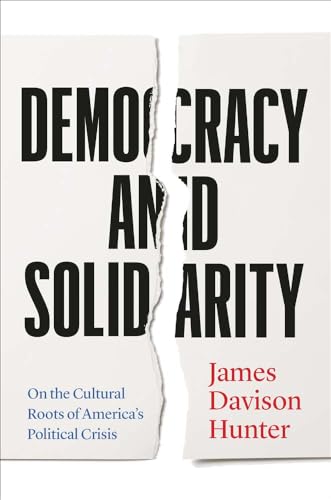
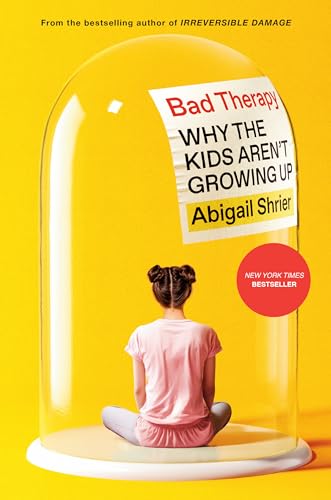
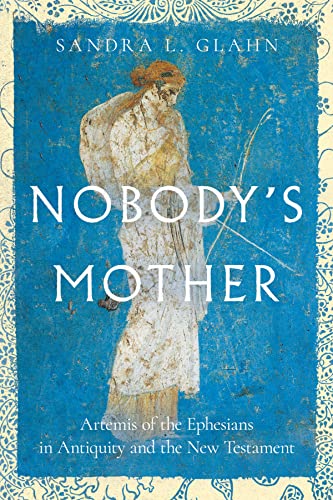
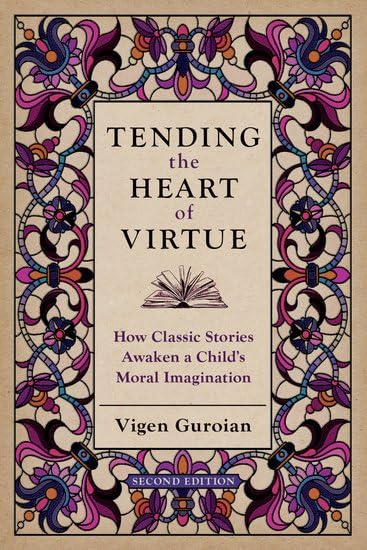
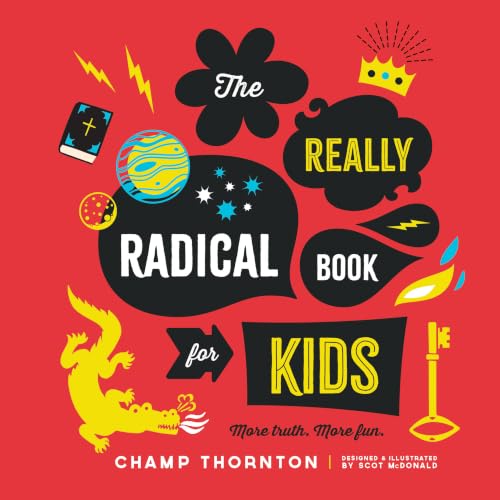
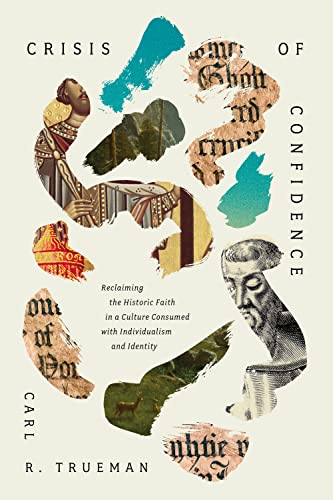
 | | Dear Reader, Opening a book is no mere academic exercise. As C. S. Lewis notes in Surprised by Joy, “A young man who wishes to remain a sound Atheist cannot be too careful of his reading. . . . God is, if I may say it, very unscrupulous.” Our reading is a spiritual activity that forms our souls. And yet, too often we dig into our books without a moment’s pause. We’re too ungrateful and too hasty. In Every Moment Holy, Volume I, Douglas McKelvey offers “A Liturgy Before Beginning a Book,” which includes this stanza: Waste no moment in my brief years O Lord.
Let all things, and this book as well,
be tools in your hands,
to shape me and make me more truly your own,
more fitly a child of the hope
of the restoration of all things in Christ
whose fullness dwells within them. Take a moment, next time you read, to offer thanks to God for the book in your hand and pray for wisdom as you sift through the author’s ideas. Don’t be afraid to put down a text that poorly uses your time or directs your soul away from Christ. Eternity is near at hand; we have no time to waste. Happy reading! | | ANDREW SPENCER | | Associate Editor | |  | | | | | “As his book’s title suggests, Hunter frames the problem of modern democracy in terms of solidarity. We tend to think of solidarity as the willingness to come together with other people. But Hunter argues that ‘solidarity . . . is about the cultural preconditions and the normative sources that make coming together possible in the first place.’ He’s not arguing Americans don’t want to come together. He’s arguing we’ve lost the cultural resources that make coming together possible.” | | REVIEWED BY BOB THUNE | | | | | | | | "Rather than drifting with the culture’s currents, Christians must apply a biblical understanding of the goodness of creation and embodied personal presence. Haidt’s book reminds us of the vital necessity of mentoring children by instruction and example, the role of hardship in producing character, the formative powers of our technological habits, and the need for community to help us address the problems of living. The church has the moral resources to help address Haidt’s concerns." | | REVIEWED BY KEITH PLUMMER | | | | | | | | "Many of Schrier’s suggestions for parents are ways to pursue a more traditional childhood: supervising less during play, providing fewer gadgets, encouraging kids to move on from disappointments, and reminding kids that they are under their parents’ authority. In trying to keep kids safe from potential emotional and physical harms, our culture is creating actual problems from an excessively therapeutic approach. Accordingly, Schrier argues, therapy and medication should be reserved for substantial mental health issues." | | REVIEWED BY ANDREW SPENCER | | | | | | | | "If ‘Nobody’s Mother’ were merely an analysis of Artemis worship in first-century Ephesus, this volume would be grist for scholars to discuss but hardly worthy of a review in a popular-level forum like this one. But that’s not the kind of book Glahn has written. She has amassed research on the Artemis cult as the hermeneutical key to Paul’s meaning in 1 Timothy. She argues that if readers fail to recognize Paul’s words as a polemic against the Artemis cult, they will not understand what “saved through childbearing” means in verse 15, much less Paul’s apparent prohibition on women teaching in verse 12." | | REVIEWED BY DENNY BURK | | | | | | | | "The Christian life is an imaginative life. We’re looking to a God we can’t see (2 Cor. 5:7), casting our full weight on a kingdom we can’t touch (Heb. 12:18), and straining toward a better country (11:16). The stories we read for fun may not lead us to the gospel directly, but they’ll make us long for it to be true. We’re imagining the goodness, truth, and beauty we know to be most real and asking God to make himself and his invisible kingdom increasingly known to us." | | REVIEWED BY KRISTEN WETHERELL | | | | | | | | From an interview with author, Champ Thornton: "I wrote the two ‘Radical Books for Kids’ in hopes that readers might learn about the faith and have fun at the same time. This made sense to me, because God is the least boring being in the universe. There’s more than enough in the Trinity and creation to captivate and delight young readers. So, as I wrote, I tried to make each of the mini-chapters both accurate and accessible, both educational and engaging." | | REVIEWED BY GINGER BLOMBERG | | | | | | | | “Confessionalism protects everyone involved in the church. In our time, the absence of confessions and standards of conduct has enabled pastoral abuse, which can take many forms. Without a doctrinal statement to keep leaders accountable to a body of teaching, they can reinvent a church’s theological values at will or impose applications beyond Scripture and beyond even the church’s publicly affirmed commitments.” | | REVIEWED BY HARRISON PERKINS | | | |  | | 1 | Elizabeth Segran, “HarperCollins Made a Tiny Tweak to Its Book Design and Has Saved Thousands of Trees as a Result” (Fast Company) “HarperCollins’s Christian publishing division, Zondervan Bibles, first came up with the idea of using design to save paper. Bibles have historically used upwards of 2,500 pages. In 2015, Zondervan’s designers determined that if they used different fonts and adjusted the page layout, they could reduce the number of sheets used. It would also cut HarperCollins’s printing costs. They developed a new compact typeface called the NIV Comfort Print. Ultimately, it saved more than 350 pages per bible, resulting in a total savings of 100 million pages in 2017. Stacked up, that would be the equivalent to four times the height of the Empire State Building.” | | 2 | Alan Jacobs, “Rewilding” (The Homebound Symphony) “I really do think that the internet, in its original open form, is an amazing thing and a genuine contributor to human flourishing — but the occlusion of the open web by the big social media companies has been a disaster for our common life and for the life of the mind. My plan, and my hope, is to keep going here long after I have lost the ability to publish anywhere else. This is my home on the web and also the place where I can most fully be myself as a writer. And that’s worth a lot.” | | 3 | Jeffery Fulks, et al, “State of the Bible” (American Bible Society) The American Bible Society has released their annual “State of the Bible” report. It takes a little work to get the document, but it’s worth it to see what their national survey shows about people’s engagement as readers of the Bible. | | |  | Wish you had a roundup of our best content?
Subscribe to our weekly Update. | | | |

|
|
About Us
|
Council
|
Donate
|
©2022 The Gospel Coalition, All Rights Reserved.
P.O. Box 170346 — Austin, TX 78717
Update Email
| Unsubscribe
|
|
|
|