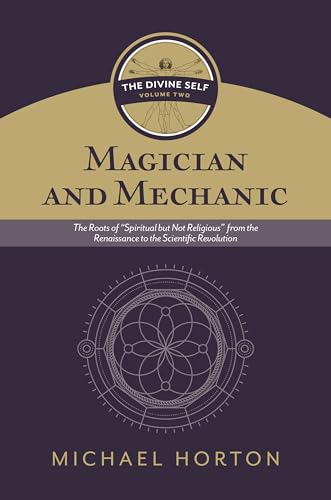
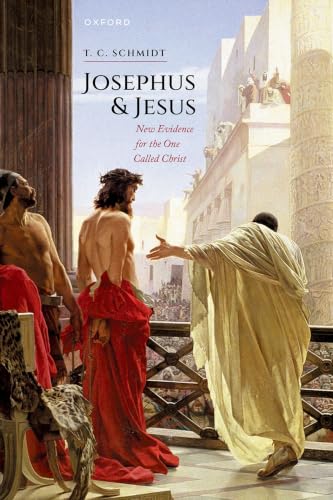
 | | Dear reader, The Reformation often gets blamed for draining the world of mystery. Critics argue that Protestantism’s emphasis on God’s transcendence and salvation by faith hollowed out creation, sidelined God’s presence in the world, and made modern disenchantment possible. In Magician and Mechanic, Michael Horton turns that story on its head. Many of the problems laid at the reformers’ feet were issues they were trying to address. Much of modernity’s confusion wasn’t caused by a loss of the supernatural but by its distortion. As Horton argues, “The story of modernity, particularly its central dogma of the divine self, is less the product of disenchanting naturalism than the ‘divine madness’ of natural supernaturalism.” An overemphasis on the immanence of God in creation drew citizens of modernity away from orthodox faith and toward a vision of the self as divine. The Reformation opposed that trend as much as it resisted clerical abuse. As I read Horton’s book, I was struck by how he’s upended so many of the critiques Protestant theologians encounter from Roman Catholicism, Eastern Orthodoxy, and even paganism. Horton doesn’t rely on a clever new narrative; he retrieves primary sources. As I argue in my review, Magician and Mechanic is a reminder that “the best solution to the errors of any age is often to look deeper at the ancient Christian gospel.” Happy reading! | | ANDREW SPENCER | | Associate Editor | |  | | | | | “Critics of modernity often insist that the solution to its spiritual malaise lies in recovering enchantment by turning inward toward the divine self. Horton shows why that impulse only deepens the problem. The reformers's insistence on sola scriptura and justification by faith alone was a necessary response to the individualistic spiritualism of their day. In ‘Magician and Mechanic,’ Michael Horton renews our confidence that the gospel is the church's enduring answer to modernity’s recycled errors.” | | REVIEWED BY ANDREW SPENCER | | | | | | | | “I’ve taught about Josephus’s life and works for more than 20 years—first in secular settings like Macquarie University and the University of Sydney, and now at Wheaton College. But ‘Josephus and Jesus: New Evidence for the One Called Christ’ by T. C. Schmidt, associate professor of religious studies at Fairfield University, has forced me to rewrite my lectures—and it might just have changed my mind. It seems that a controversial passage about Jesus’s resurrection might be original after all.” | | REVIEWED BY JOHN DICKSON | | | | | | | | “Modern Stoicism prescribes a way of life rooted in self-sufficiency. If you’re suffering, chalk it up to your perspective on events rather than the events themselves. And change your perspective. If you’re anxious, cast out your anxieties with your own power. If you’re seeking a life of purpose, live life according to the virtues found in Nature. Stoic virtue is better than many approaches to living in the modern world, but it falls short of the Christian ideal for the virtuous life.” | | REVIEWED BY THOMAS SMYLY | | | | | | | | “In ‘Everybody Loses: The Tumultuous Rise of American Sports Gambling,’ journalist Danny Funt explains how a system that’s rigged against the bettors made it into mainstream culture. Funt also convincingly argues that the costs of legalized sports gambling are already high and things are likely to get worse before they get better. As the costs of sports betting continue to rise, Christians can benefit from understanding how sports betting took over our culture and why that's bad.” | | REVIEWED BY RASHAN FROST | | | |  | | 1 | Trevin Wax, “The Passage in ‘The Lord of the Rings’ Tolkien Couldn’t Read Without Weeping” (The Gospel Coalition) “Peter Kreeft has a new book out, a statement nearly always true no matter the month of the year. Nearing his 90th birthday, he remains one of the most prolific Christian writers alive today, rivaling the prodigious output of G. K. Chesterton and others. His latest book focuses on what he calls the two greatest novels ever written: The Lord of the Rings and The Brothers Karamazov. “As a longtime admirer of both works (I read Dostoevsky’s masterpiece again last year, for what I think was the sixth time), I can’t disagree with his selections. So I was curious to see what fresh insight he might draw from these novels, two books that continue to flow with wisdom long after the popularity of most others fades.” | | 2 | Neil Shenvi and Pat Sawyer, “Why the Gospel Is Better News than Wokeness” (The Gospel Coalition) “Christianity’s story is the true story of reality. It has the power to displace whatever false narratives have captured our hearts and minds, including the ones promulgated by critical theory.” | | 3 | Ivan Mesa and Simonetta Carr, “On My Shelf: Life and Books with Simonetta Carr” (The Gospel Coalition) “Church history is becoming more accessible to kids through books and videos. Exposing the children to these resources is the first step. History is fascinating in itself. But I would encourage parents to look for historical accuracy. Don’t try to paint a picture where Christians are always good and right, or you may have problems when your kids grow up. “Instead, help them to face history with honesty and courage, knowing that we’re all still learning and, most of all, God is still preserving his church in spite of our mistakes.” | | |  | Wish you had a roundup of our best content?
Subscribe to our weekly Update. | | | |

|
|
About Us
|
Council
|
Donate
|
©2022 The Gospel Coalition, All Rights Reserved.
P.O. Box 170346 — Austin, TX 78717
Update Email
| Unsubscribe
|
|
|
|