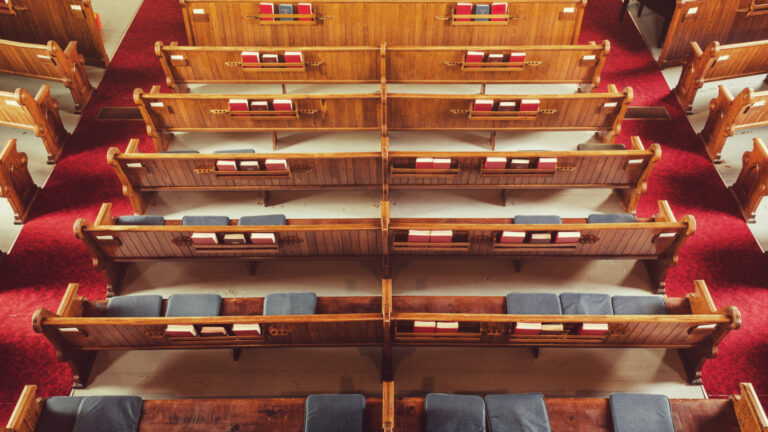
| I have a church pew in my family room. Salvaged from an old church in rural Mississippi, its dark wood bears the scratches of bygone generations of worshipers. I imagine them, fanning themselves in the Delta summer heat as the pastor preaches. Children in stiff leather shoes swinging their legs off the edge, hat-wearing grandmothers leaning against the curved arms. My own kids sit there now—when all the other seats in the room are taken. Our pew is a useful piece of furniture, but it’s not comfortable. The curved wood of the seat isn’t softened by cushions or shaped by ergonomics. And its length accommodates several people, but there’s no clear demarcation of personal space. More than one sibling squabble has erupted there. But so have plenty of spontaneous hugs. In his recent article for TGC, Eugene Park looks back at church pews with longing. Unlike the separate chairs of many contemporary worship spaces, pews forced worshipers to get close, be uncomfortable, and give up a degree of privacy. The pew didn’t let you hide in isolated comfort. It placed you next to the kid with the runny nose, the out-of-tune girl who thought she should be leading worship, or the guy who stole your crush. . . . Proximity was nonnegotiable in the pews. They reminded you, I’m here, and they are too. In an age when it’s all too easy to choose who we want to be close to and avoid everyone else, we need the enforced nearness that comes with life in the church. And we might even need a return to the messy no-man’s-land of pews. After all, it’s no surprise that a humble construction of wood and nails can form individual believers into a family. |