|
|
 |  |  | | The Use of Leviticus 18:5 in Galatians 3:12: A Redemptive-Historical Reassessment | | BY JASON S. DEROUCHIE | | Jason DeRouchie examines Paul’s appeal to Scripture to support that “no one is justified before God by the law” (Gal 3:11). Leviticus 18:5 portrays the principle of “doing” in order to attain life that characterized the Mosaic law-covenant, and when this principle met human inability, the law became an enslaving guardian until Christ (3:21–26) and identified how “all who rely on works of the law are under a curse” (3:10). To say “the law is not of faith” (3:12) means that the era of the law-covenant was not characterized by faith leading to life but by rebellion leading to death. | 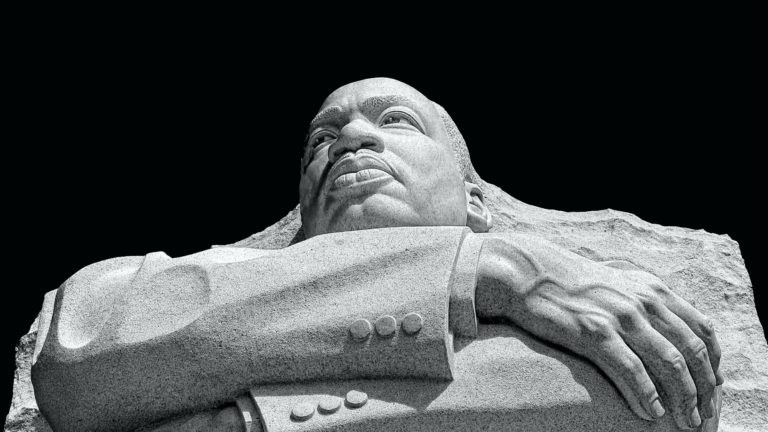 | | Celebration and Betrayal: Martin Luther King’s Case for Racial Justice and Our Current Dilemma | | BY JAMES S. SPIEGEL | | James Spiegel writes that Martin Luther King’s Christian theological ethics provides the crucial philosophical foundation for racial justice secular alternatives such as that utilitarianism, Kantian ethics, virtue ethics, and social contractarianism fail to achieve. He argues that either we must readmit theological considerations into the public square or surrender hope for the achievement of lasting racial justice in the United States. | | | |  | | Christ and the Concept of Person | | BY LYDIA JAEGER | | The concept of personhood is crucial for our understanding of what it is to be human. Lydia Jaeger considers the ways that Christological debates in the early Church contributed to the emergence of the concept of person and modern definitions of person are unsatisfactory because they neglect these theological roots. She then draws some ethical implications from the Christological insight that the person is a fundamental ontological category. | | | | | The “Epistle of Straw”: Reflections on Luther and the Epistle of James | | BY MARTIN FOORD | | Many believe that because Martin Luther called James an “epistle of straw” he wished to remove it from Scripture. Martin Foord seeks to show that Luther wished to keep James in the New Testament and his decision was not based on personal whim. Luther was able to call James an “epistle of straw” and retain its canonicity because he held to a two-level view of the New Testament: James was excluded from the top tier and consigned to the lower tier of New Testament books. However, Foord also examines Luther’s two-level understanding of the New Testament and his conclusions about James, finding them ultimately unconvincing because they are not faithful to Scripture itself. | | The Resurgence of Two Kingdoms Doctrine: A Survey of the Literature | | BY MICHAEL N. JACOBS | | Two Kingdoms doctrine distinguishes between the common kingdom—the created order common to all life that will one day come to an end—and the redemptive kingdom—the church and those called to consummation into the world to come at the end of the current age. Michael Jacobs surveys the recent resurgence of scholarship on Two Kingdoms doctrine, reviews neo-Calvinist criticisms of the doctrine, and suggests potential paths forward for future Two Kingdoms scholarship. | | Why Not Grandchildren? An Argument Against Reformed Paedobaptism | | BY GAVIN ORTLUND | | Reformed paedobaptism generally argues from continuity with the Abrahamic covenant, situating infant baptism as a continuation of infant circumcision. Credobaptist objections have typically challenged this premise, stressing points of discontinuity across the biblical covenants. Gavin Ortlund suggests a different (though not incompatible) response, arguing that even if the paedobaptist vision of continuity between circumcision and baptism is accepted, current paedobaptist practice is not in line with it anyway, since circumcision was never at any time administered to “those who believe and their children.” Ortlund surveys Reformed baptismal practices from John Calvin through the mid-17th century that, by the same appeal to continuity with circumcision, affirmed intergenerational baptism. | | Is “Online Church” Really Church? The Church as God’s Temple | | BY RONALD L. GIESE, JR. | | Many churches switched to streaming or recording their services during the COVID-19 crisis. This brought a question to the forefront: Can church be done online, not just in part but fully? Ron Giese proposes that, though we should use technology in many ministry areas, “online church” is an expression that should not be used. First, one of Paul’s main metaphors for the church is the temple of God. And, in keeping with the literal temple of the Old Testament, and the eschatological temple of the future, this is a place, in the usual meaning of the word. That place now is the local church, gathered physically. Second, God did not create humans as disembodied souls. The soul and body are both critical in Christian anthropology, redemption, and ministry. | |

|
|
Themelios is a peer-reviewed international evangelical theological journal that expounds on the historic Christian faith. Its primary audience is theological students, pastors and scholars. It was formerly a print journal operated by RTSF/UCCF in the UK, and it became a digital journal operated by The Gospel Coalition in 2008.
|
|
©2022 The Gospel Coalition, All Rights Reserved.
P.O. Box 170346 — Austin, TX 78717
Update Email | Unsubscribe
|
|