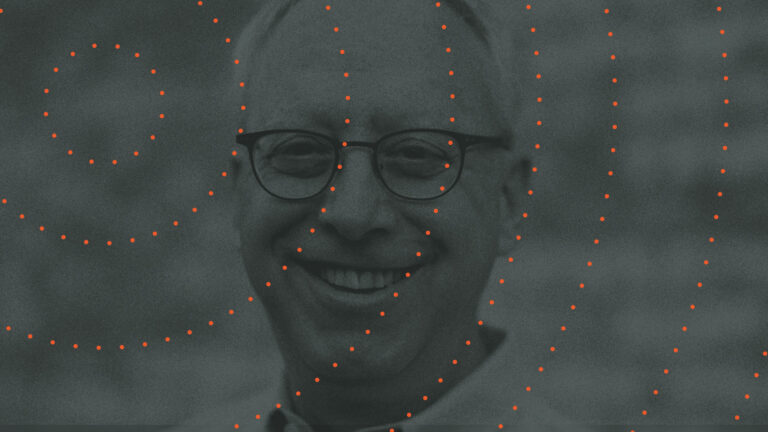
February Newsletter Earlier this month Gray Sutanto, a fellow with The Keller Center for Cultural Apologetics, lectured at Reformed Theological Seminary’s Jackson campus in a series entitled, “God and Humanity: Herman Bavinck and Theological Anthropology.” Sutanto traced seven aspects of Bavinck’s work. Each contributes to cultural apologetics, but a few stand out. First, Bavinck accounts for the soul’s intimate relation to the body that, together, define what it means to be a human. Second, Bavinck describes the complete unfolding of the image of God as only coming to its fullest portrait in corporate humanity. Last, Sutanto highlights a unique aspect of Bavinck’s theological anthropology: his discussion of personality. In his second lecture, Sutanto places Bavinck in conversation with modern cognitive science such as affect theory. Though Bavinck preceded the fullest expression of these theories by a century, his work remains surprisingly relevant. Affect theory posits that humans are not primarily thinking things. Rather, we are shaped in our thinking and willing by precognitive forces such as the body, social contexts, and everyday habits. Human rational thought is caught in a complex web of affects that give it structures of plausibility and “intuitive pulls” toward certain things. Shaped at such a fundamental level, such knowledge is not easily shaken. Building on his concepts of personality and the integral relationship between the body and soul, Bavinck finds much to endorse in affect theory. However, he finds these theories stopping just short. In Bavinck’s view, as beings created in the image of God and for relationship with God, humans demonstrate a pull towards the religious in response to general revelation at a primordial level. You can read Sutanto’s earlier reflections on affect theory published by The Gospel Coalition. |
FURTHER RESOURCES  Derek Rishmawy engages Jordan Peterson and Tom Holland, within the context of Yuval Harari’s lecture concerning the reality (or lack thereof) of human rights. Rishmawy summarizes answers to the origin of rights offered by these three influential thinkers and offers a distinctly Christian account of human rights.  Michael Kruger takes up the modern scholarly doubt of the historical accuracy of Luke 2’s census as a test case for how Christian might respond without sinking into anxiety over what we do and don’t know. Kruger’s approach is practical and prudent, without conceding ground on the Christian understanding of Scripture. Christians, just like our challengers and good-faith interlocutors, face limitations on what we can know. Following these steps helps us lay down our anxiety as we renew our confidence in God and his Word.  Glen Scrivener considers the post office scandal at the center of ITV’s dramatic documentary Mr. Bates vs the Post Office. Ultimately, Scrivener points us to the Christian story where we see the greatest miscarriage of justice in human history. Nevertheless the Son of God through his suffering vindicates truth and justice.  On February 28, The Keller Center welcomes nearly 400 participants from 30 countries around the world and six continents for our first Cultural Apologetics 101 cohort. Participants will learn not only how to better exegete contemporary cultural narratives but also how to more effectively challenge these narratives and appeal holistically to the goodness, beauty, and truth of Christianity. By also sampling some of the most frequent Western objections to Christianity, our fellows will offer ways to respond to these challenges, with tools for participants to personalize in their own contexts. Finally, the course will explore practical ways cultural apologetics can be used in teaching, preaching, Bible studies, and day-to-day conversations. |